JOURNAL
Plastic Surgery & Skin Quality: Why Surgery Alone Isn't Enough
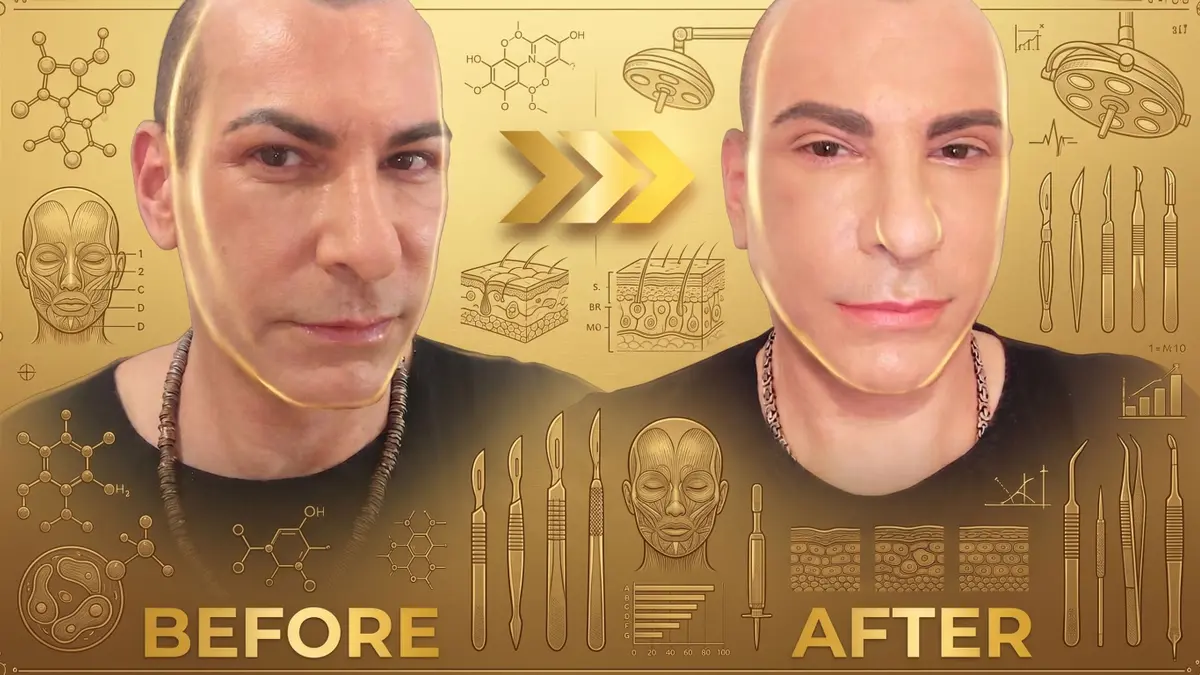
The Plastic Illusion: Why a Facelift Doesn't Alter Skin Quality (And How to Care for It Before & After)
In the world of modern aesthetics, plastic surgery—whether a facelift, blepharoplasty, or neck lift—is frequently viewed as the ultimate anti-aging solution. Patients implicitly expect that once the surgeon completes the procedure, their skin will magically revert to looking youthful, glowing, smooth, and vibrant.
Yet here is the clinical and physiological reality that many discover only post-surgery: Plastic surgery alters tissue position, geometry, and mechanical tension—it does not alter the intrinsic biological quality of the skin.
Surgery can effectively pull lax skin, tighten underlying facial muscles (SMAS), and excise redundant tissue. However, it cannot synthesize depleted collagen, erase hyperpigmentation, refine enlarged pores, balance pH, or restore lost dermal moisture and elasticity. If you stretch a worn, damaged fabric, it will indeed be tighter—but it remains a worn, damaged fabric.
Over 25 years of developing formulations in the laboratory, I observed that combining surgical architecture with precise molecular skincare is the sole pathway to a breathtaking, natural aesthetic outcome. In this article, we will deconstruct the difference between surgical geometry and cellular architecture, revealing how to prepare and preserve your skin before and after a procedure.
1. Surgical Physiology: What Surgery Does (And What It Cannot Do)
To understand why a molecular skincare routine is mandatory alongside surgery, we must differentiate between two distinct anatomical levels of the face:
The Surgical Level (SMAS & Structural Tightening): The plastic surgeon operates primarily within deep tissue layers—repositioning fat pads, tightening muscle fascia, and removing excess skin. This is brilliant architectural work on contour and proportion.
The Cellular-Epidermal Level (Skin Quality): Skin texture, radiance, density, pigmentation, and elasticity are dictated exclusively within the dermal and epidermal layers. Surgery does not supply mitochondria with ATP energy, inhibit Tyrosinase (the pigmentation enzyme), or restore ceramides to the lipid barrier.
Without targeted care for skin quality, tightened skin that suffers from dullness, dehydration, sun spots, or fine crinkling will continue to appear tired and aged, even after a flawless surgical execution.
2. Phase One: Pre-Operative Conditioning
A cardinal rule in advanced dermatology is: Never introduce compromised, inflamed, or severely dehydrated skin into an operating room.
When skin enters a surgical procedure healthy, saturated with molecular moisture, and fortified with a robust epidermal barrier, its biological response to surgical incisions and trauma is completely transformed. Conditioning the skin in the weeks leading up to surgery offers three immense clinical advantages:
Accelerated Healing & Tissue Regeneration: Cells charged with ATP energy and antioxidants re-align incision edges with significantly higher efficiency.
Optimized Scarring: Pliable skin rich in essential fatty acids and high-quality collagen forms flatter, paler, and far less visible scars compared to rigid, dry tissue.
Reduced Complication Risks: A resilient skin barrier and a balanced microbiome actively prevent secondary bacterial infections along incision lines.
3. Phase Two: Post-Operative Recovery & Preservation
Following surgery, skin undergoes traumatic stress characterized by edema, bruising, and localized sensory loss due to micro-nerve disruption. This is the most critical window where molecular skincare intervenes—first for recovery and soothing, and subsequently for long-term preservation:
A. The Immediate Recovery Phase (Soothing & Barrier Repair)
During initial post-surgical weeks, skin experiences elevated micro-inflammation and a disrupted pH mantle. This phase requires gentle neurocosmetic and barrier-repair formulas:
pH Re-Balancing & Inflammation Calming: Utilizing bio-identical molecules like Niacinamide, Allantoin, and adaptogens to downregulate pro-inflammatory cytokines and soothe redness.
Lipid Barrier Reconstruction: Supplying skin-identical ceramides and cold-pressed botanical lipids to halt transepidermal water loss (TEWL) and eliminate dry tightness.
B. Long-Term Maintenance (Preserving Skin Quality)
Once incisions have completely healed, the paramount phase begins: adopting the Layering Methodology (LayerSystem) to preserve surgical results for years to come.
Continuous Collagen Stimulation: Infusing signal peptides and encapsulated night retinol to ensure dermal fibroblasts continuously produce fresh collagen and elastin, maintaining dermal density.
Molecular Brightening: Deploying Vitamin C, Kojic Acid, and Niacinamide to erase dark spots and grant tightened skin its deserved radiance.
Absolute Dual Sun Shielding: Applying broad-spectrum chemical sunscreen topped with a smart mineral shield. Solar radiation is the ultimate enemy of collagen and fresh scar tissue—dual shielding is mandatory to prevent dark post-inflammatory hyperpigmentation (PIH).
4. The Recovery & Maintenance Layering Protocol (LayerSystem)
To ensure your skin canvas matches your surgical contour, adopt this post-healing layering protocol:
Step 1: Gentle Physiological Cleansing (pH ~5.5): Washing with a low-foaming cleanser that purifies without drying or disturbing the restorative microbiome.
Step 2: Concentrated Molecular Serum (Deep Hydration): Infusing a serum rich in tri-molecular hyaluronic acid, peptides, and antioxidants to flood the dermis with internal plumping moisture.
Step 3: Evening Resurfacing & Activation: Applying encapsulated retinol or mild hydroxy acids to accelerate cell turnover and maintain a sleek texture.
Step 4: Lipid Barrier Sealing: Layering a moisturizer rich in ceramides and pure botanical lipids to calm tissue and lock in hydration.
Step 5: Absolute Morning Dual Protection: Applying Sun Block Cream followed by Smart Tint Mineral Sun Shield to prevent scar pigmentation and protect against UV rays and Blue Light.
Conclusion
Plastic surgery and molecular skincare are not competing alternatives—they are ultimate partners. Surgery provides structural contouring and tightening, while molecular skincare supplies health, vitality, luminosity, and elasticity.
By properly conditioning the skin prior to surgery, and committing to a disciplined layering ritual thereafter—you enjoy the most striking, natural, and enduring aesthetic result possible. Grant your skin the complete scientific care it truly deserves.