JOURNAL
The Foundation of Skin Architecture: Why Incorrect Cleansing Ruins Your Most Expensive Anti-Aging Products
In the pursuit of firm, radiant, and smooth skin, we tend to invest the majority of our attention—and budget—in complex active serums, luxurious creams, and highly sophisticated anti-aging formulations. Yet, clinical reality demonstrates that the most critical step in any advanced skincare routine is actually the most basic one: cleansing.
From an SEO perspective, search queries like "best face wash for dry skin" or "how to cleanse skin properly" hold massive monthly search volume. In this article, however, we will not look at a superficial wash, but rather explore the physiological science of the skin's Acid Mantle, revealing how incorrect cleansing choices create a molecular catastrophe that prevents active serums from performing.
The Acid Mantle: Your Invisible Shield
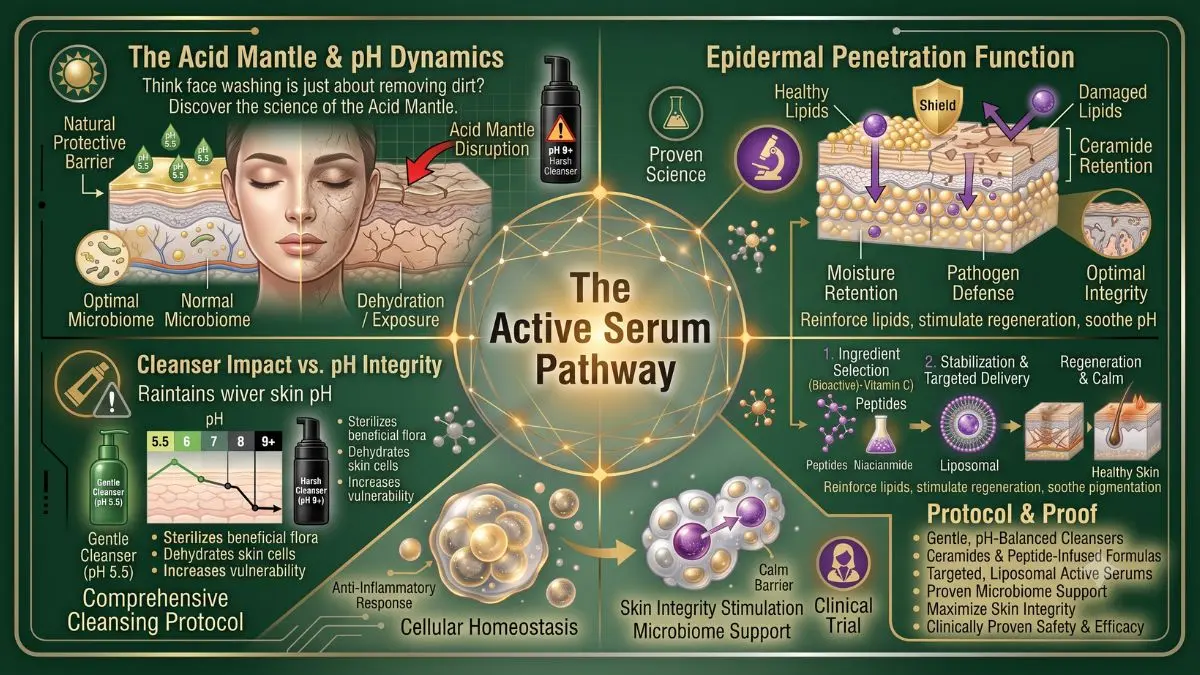
Healthy skin is not neutral; it is naturally acidic, with an optimal pH level sitting between 4.7 and 5.5. This acidity is maintained by the Acid Mantle—a micro-thin film on the surface of the skin composed of sebum, sweat, and essential fatty acids. This layer functions as a primary defensive shield, preventing pathogenic bacteria and pollutants from colonizing the surface while locking in vital moisture.
When we use conventional facial cleansers based on harsh foaming agents (such as SLS) or alkaline soap bases, we completely strip this protective acid mantle. The skin is left bare, vulnerable, and dehydrated, requiring up to 14 hours to naturally recover its physiological pH balance.
The Destructive Backlash on Your Active Serums
Why does aggressive cleansing compromise the high-performance serums and creams applied immediately afterward?
Disrupting the Skin's Electrical Charge: Many active molecules (such as Vitamin C, Glycolic, or Lactic acid) require an acidic environment to penetrate effectively. When the skin's surface pH rises and becomes alkaline due to harsh soaps, these molecules lose their chemical stability and degrade before they can even cross the epidermis.
Creating a Dehydrated Barrier: Stripped, parched skin develops a dry, flaky surface barrier that physically blocks hyaluronic acids and peptides from absorbing deep into the tissue.
Triggering Unnecessary Inflammation: Applying potent actives onto a barrier compromised by harsh washing will trigger redness, irritation, and micro-inflammation—the exact physiological states that accelerate skin aging rather than prevent it.
Step 01 of the Layering Ritual: Molecular Cleansing & Preparation
Physiological cleansing is not designed to "degrease" or "scrub" the skin raw. Instead, its purpose is to prepare the skin's surface chemically to receive subsequent treatment layers:
Preserving the Physiological pH: Using a slightly acidic formulation that balances and respects the acid mantle from the very first step.
Selective Dirt Removal: Removing water- and oil-soluble impurities while fully preserving the intercellular lipids that hold the skin architecture together.
Pre-Hydrating the Canvas: Infusing botanical extracts and soothing agents that leave the skin supple, moist, and optimally receptive to absorbing the molecular serums of the subsequent steps.