JOURNAL
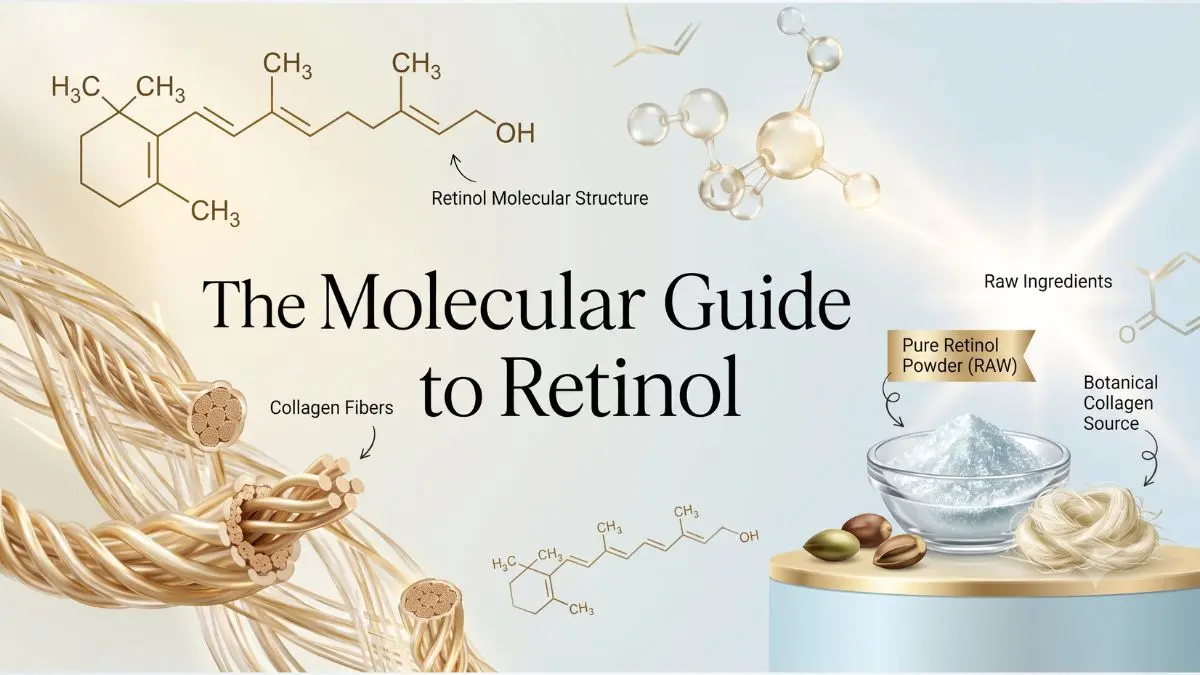
The Molecular Guide to Retinol: Building Collagen Without Irritation
The Molecular Guide to Retinol: How Vitamin A Rewrites Your Skin's Future (Without the Irritation)
If you were to ask ten different dermatologists to name the single most proven and powerful anti-aging ingredient in scientific skincare, they would answer in unison: Retinol. This remarkable derivative of Vitamin A is the most extensively researched ingredient in the history of skincare, backed by hundreds of clinical studies proving its ability to physically alter cellular structure and reverse the visible signs of aging.
Yet, despite its undisputed status, retinol is also the ingredient that stirs the most hesitation. Frequent Google searches like "how to use retinol" or "retinol side effects" demonstrate that many consumers have experienced intense redness, flaking, and severe dryness from overly aggressive formulations. Over 25 years of formulating, my greatest challenge was solving this exact equation: how to capture the uncompromising power of retinol and embed it within a molecular night cream that rejuvenates the skin without disrupting its epidermal barrier. In this guide, we will break down the precise science of retinol and reveal how to integrate it beautifully into your layering architecture.
The Science of Vitamin A: How Retinol Functions at a Cellular Level
To comprehend why retinol is so exceptionally effective, we must understand that it does not function like a standard chemical exfoliant that simply sloughs off dead surface cells. Retinol acts as a highly advanced cell-communicating ingredient. Our skin cells possess specific receptors engineered exclusively to bind with retinoic acid. When retinol is applied, the skin converts it into an active acid that connects directly with the cell nucleus, delivering a clear operational command: behave like a young, healthy cell.
The manifestation of this command occurs across three deep clinical dimensions:
Accelerating Cell Turnover: Mature skin cells naturally slow down their renewal cycle (taking 40 to 60 days), which results in a dull, coarse texture and deep wrinkles. Retinol restores this turnover rate to that of youth (around 28 days), continuously pushing fresh, healthy cells to the surface.
Massive Stimulation of Collagen and Elastin: Retinol penetrates deep into the dermis, awakening fibroblast cells and prompting them to synthesize fresh collagen fibers, while simultaneously inhibiting the enzymes responsible for breaking down existing collagen.
Regulating Melanin and Sebum: Retinol balances melanocyte activity, leading to a dramatic reduction in hyperpigmentation and age spots, while simultaneously reducing excess oil production to minimize enlarged pores and prevent blemishes.
Cracking the Equation: Potent Retinol Without the Redness and Dryness
The historical pitfall of many commercial retinol products on the market is a phenomenon known as "Retinization" — an adjustment period where the skin experiences inflammation, irritation, and peeling due to an aggressive assault on the protective skin barrier. Many brands attempt to solve this by lowering the concentration to an ineffective trace amount, thereby sacrificing all therapeutic benefits.
In developing our Retinol Night Cream (Product No. 11), I approached this problem through the lens of molecular architecture. The solution is not to diminish the retinol's potency, but rather to encapsulate it within a smart delivery system and a protective botanical complex.
The retinol in our formula is molecularly engineered to release into the skin gradually and continuously throughout the night (Time-Release), ensuring the cells never experience a sudden shock. Concurrently, the formula is enriched with precious cold-pressed botanical oils, ceramides, and essential fatty acids. These ingredients immediately restock the lipids of the skin barrier, locking in moisture and neutralizing potential irritation. The result is maximum anti-aging efficacy within a skin canvas that remains perfectly calm, plump, and deeply hydrated.
The Nightly Layering Protocol (LayerSystem7) for Retinol
Because retinol is a highly active compound that alters cellular activity, it requires a proper synergy within your evening ritual. Here is the professional protocol for integrating it:
Physiological Cleansing Step: Wash your face with Pure Skin Cleanser 1 to remove environmental impurities without stripping the skin's natural acidic pH. Pat completely dry (it is highly recommended never to apply retinol to damp skin, as water increases absorption speed uncontrollably, which can trigger irritation).
Molecular Hydration Step: Apply an active serum based on tri-molecular hyaluronic acid or rich antioxidants. This layer cushions the skin with deep, structural moisture.
Molecular Repair and Rewriting Layer: Apply a small, pea-sized amount of the Retinol Night Cream. Gently massage in upward motions across the face and neck, carefully avoiding the immediate eye area.
The Rule of Graduation and Care: If you are new to retinol, introduce it slowly: apply the cream only twice a week for the first two weeks, increase to three times a week for the following two weeks, and only then transition to regular nightly use. Furthermore, because retinol accelerates cell turnover, applying a high SPF protection every single morning is non-negotiable.
Conclusion: Your Skin, Re-Engineered Every Single Night
Retinol is not just another passing trend in modern skincare; it is a mighty scientific instrument that allows us to take control over the rate of skin aging and rewrite its cellular architecture while we rest. When engineered properly, calibrated to a precise concentration, and protected by a rich botanical cushion, it becomes your skin's ultimate ally.
Grant your skin the most scientific, profound, and respectful treatment, and wake up every morning to a smoother, firmer, and more radiant complexion.