JOURNAL
The Roadmap of Dark Spots: The Cellular Mechanism of Hyperpigmentation and How to Brighten Skin Safely
Pigmentation spots—whether caused by sun exposure, hormonal fluctuations (melasma), or past acne inflammation (Post-Inflammatory Hyperpigmentation, or PIH)—are among the most common and stubborn skincare challenges. Most people immediately turn to strong exfoliating acids or harsh chemical bleaching agents, hoping to simply "peel away" the dark spot.
However, the skin is not a blank sheet of paper that can be erased; it is a highly responsive, living system. Aggressive peeling without understanding the cellular mechanism can trigger a defensive rebound and worsen the dark spots. In this article, we will examine the anatomy of melanocytes and explore how precise molecular cosmetics brightens the skin from the inside out while preserving cellular architecture.
Melanocytes: The Guardians of the Cell
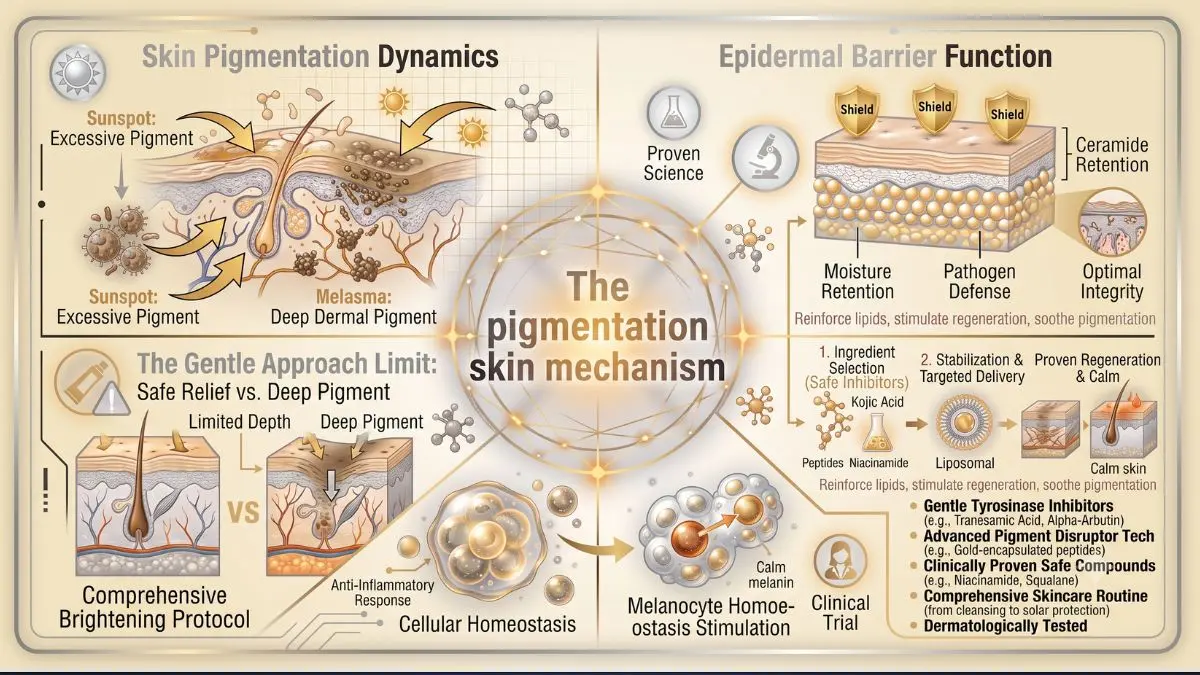
To resolve hyperpigmentation, we must first understand melanocytes—specialized cells located at the basal layer of the epidermis. Their main function is to synthesize a dark pigment called melanin. Melanin is actually the body’s natural defense mechanism: it acts as a microscopic "umbrella" that drapes over the cell nuclei to shield their DNA from destructive UV radiation.
When the skin experiences ongoing stimulation—whether from sun exposure, localized acne inflammation, or hormonal shifts—melanocytes enter a state of hyper-arousal. They begin overproducing melanin unevenly, transferring this pigment through small dendritic pathways to neighboring skin cells. The dark spot we see on the surface is the physical record of this defensive overcompensation.
The Trap of Aggressive Peeling
When we attempt to battle hyperpigmentation with overly aggressive chemical peels or constant drying, we damage the skin's barrier and generate a new wave of inflammation. The melanocytes interpret this trauma as a physical threat, responding by synthesizing even more melanin to protect the injured area. This is why many experience a dramatic worsening of dark spots shortly after undergoing intense chemical peels.
A Molecular Multi-Step Brightening Strategy
Effectively treating hyperpigmentation requires a multi-layered approach that addresses the melanin synthesis pathway at different stages:
Inhibiting Melanin Synthesis (Tyrosinase Inhibition): Utilizing advanced molecular actives that penetrate to the basal layer to gently inhibit the tyrosinase enzyme responsible for melanin production, without damaging the melanocytes.
Preventing Pigment Transfer: Using active molecules that block the transfer of newly created melanin from the melanocytes to the surrounding epidermal cells.
Controlled & Protected Cell Renewal: Integrating gentle alpha and beta hydroxy acids (AHAs/BHAs) alongside retinol to safely accelerate the shedding of older, pigmented cells, while deeply hydrating the skin to prevent new inflammation.