JOURNAL
The Structure of Delicate Skin Around The Eye: The Science Behind Targeted, Layered, and Molecular Eye Care
The skin surrounding our eyes is the first to betray our age, stress levels, and modern screen-dominated lifestyles. Dark under-eye circles, morning puffiness, and fine "crow’s feet" wrinkles are the most frequent complaints in the realm of advanced dermatology. Unsurprisingly, search queries like "how to treat dark circles" or "best eye cream for wrinkles" remain at an all-time high.
Yet, despite being the most discussed area in skincare, the eye contour is also shrouded in the most myths and hesitation. For years, we were conditioned to believe that the delicate eye area is a strict "no-fly zone" for potent active ingredients like retinol or alpha/beta hydroxy acids (AHAs/BHAs), and that it only requires light, superficial hydration.
Over 25 years of formulating in the laboratory, I learned that this concept is fundamentally incorrect. The periorbital skin does not require avoidance—it requires precise molecular engineering and a controlled layering protocol. In this article, we will deconstruct the unique physiology of the eye area and explore how combining mesotherapy, multi-molecular hyaluronic acid, tailored acids, and retinoids delivers transformative clinical results.
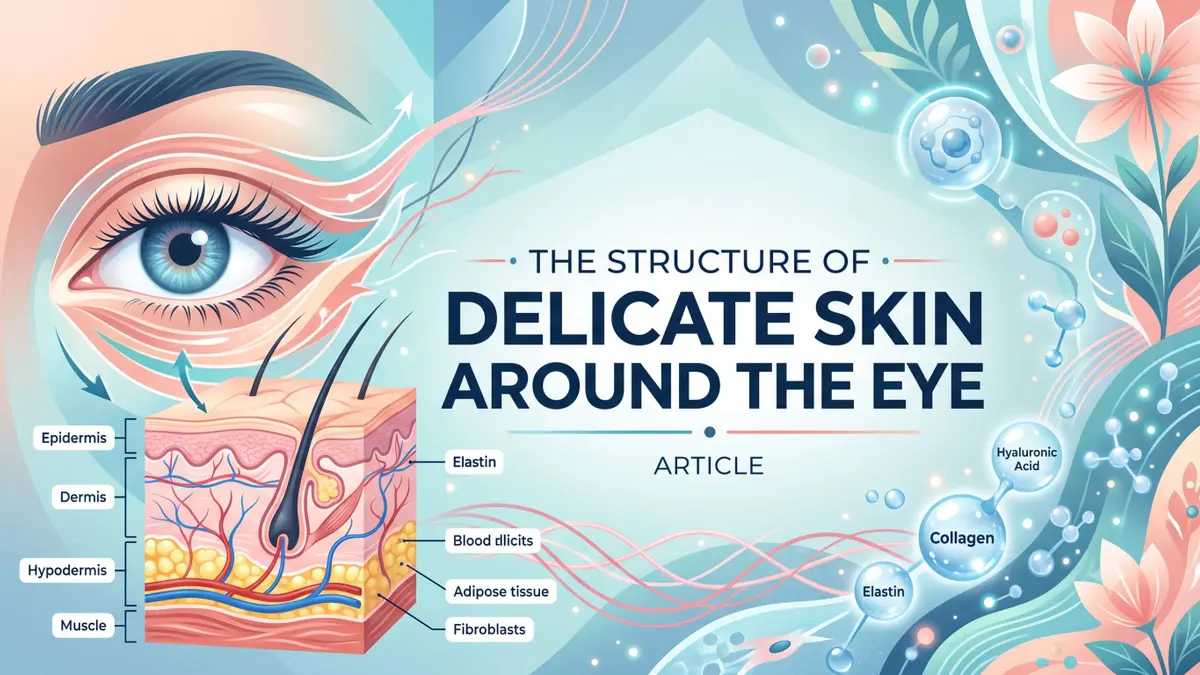
The Physiology of the Eye Contour: Why Is It So Vulnerable?
To effectively treat the periorbital zone, we must first master its distinct physiological characteristics:
Microscopic Thickness: The skin surrounding the eyes is the thinnest on the human body—measuring merely 0.3 to 0.5 millimeters thick (roughly one-quarter the thickness of the rest of the face).
Scarcity of Sebaceous Glands: This region contains virtually no natural oil glands. Consequently, its lipid barrier is naturally depleted, making it highly susceptible to dehydration, fine lines, and premature creping.
Complex Microcirculation: The area is densely populated with tiny capillaries and a delicate lymphatic drainage network. When local circulation slows (due to fatigue, genetics, or screen strain), fluid pools (puffiness) and vascular pigments leak, manifesting as dark under-eye circles.
Unceasing Mechanical Strain: Periorbital muscles contract thousands of times a day (blinking, squinting, smiling). This constant movement places continuous mechanical stress on delicate collagen and elastin fibers.
Debunking the "Forbidden Zone" Myth: Tailored AHAs/BHAs and Retinol
One of the most important breakthroughs in modern molecular cosmetics is that the eye area requires cellular renewal just as much as—if not more than—the rest of the face.
The fear of using retinol or hydroxy acids around the eyes stems from the misuse of aggressive products engineered for thicker facial skin. However, when these active molecules are specifically formulated for the delicate periorbital anatomy, dermatological magic happens:
Gentle, Controlled AHA/BHA Acids: Balanced, low-dose hydroxy acids do not harm the eye contour. They gently dissolve the dead desmosomes on the surface, accelerating cell turnover and paving an open path for brightening agents and hydration. Furthermore, BHAs refine texture and assist in clearing tiny keratin/oil build-ups (milia).
Refined Molecular Retinol: Retinol encapsulated within a time-release delivery system alongside soothing botanical buffers is the ultimate tool for thickening thin periorbital skin. It prompts dermal fibroblasts to synthesize fresh collagen and elastin, gradually building skin density and smoothing fine lines without inducing redness or peeling.
The Therapeutic Mechanism: Mesotherapy, Hyaluronic Acid, and Layered Nutrition
To achieve true clinical transformation, eye care cannot rely on a single, isolated cream. It must operate within a layered architecture bridging mechanical and molecular engineering:
1. The Mechanical Phase: Microchannel Creation (Home Mesotherapy)
Utilizing a specialized, micro-needle roller designed specifically for sensitive areas (calibrated to a safe 0.25mm to 0.5mm depth) creates invisible microchannels. This mechanical action stimulates the skin's natural healing cascade and increases active ingredient permeability by hundreds of percent.
2. The Molecular Phase: Tri-Molecular Hyaluronic Acid
Immediately following microchannel creation (or as a daily active serum step), infusing a Tri-Molecular Hyaluronic Acid Complex is paramount:
Low molecular weight fractions slip deep into the dermal tissue, binding water to create an internal structural plumping effect that lifts hollows and smooths fine lines.
Medium and high molecular weight fractions restore the surface barrier, locking in moisture and halting transepidermal water loss (TEWL).
3. The Locking, Brightening, and Energizing Phase (Targeted Eye Creams)
Over the active molecular serum, a rich, targeted eye cream must be layered. This phase integrates targeted peptides, potent antioxidants (such as Vitamin C and gold fractions), and specialized brightening agents. The cream locks in the underlying active serum, stimulates capillary microcirculation to fade dark circles, reduces fluid retention to calm puffiness, and provides a supple lipid cushion that shields the eye contour day and night.
The Recommended Periorbital Layering Protocol
To apply this science effectively, adopt the following periorbital ritual:
Gentle Physiological Cleansing: Wash the face and eye area with a pH-balanced cleanser that removes impurities without stripping delicate surface lipids.
Concentrated Molecular Serum (Deep Treatment): Gently pat an active eye serum packed with tri-molecular hyaluronic acid, peptides, and antioxidants into the orbital bone. When incorporating mesotherapy (1-2 times weekly), gently roll the micro-roller over the serum to drive it deep into the tissue.
Locking, Nourishing, and Brightening (Advanced Eye Cream): Apply a rich eye cream containing vitamin derivatives, tailored gentle acids, or refined night retinoids. This locks in the serum, supplies essential fatty acids, and directly targets dark circles, puffiness, and fine lines.
Conclusion
Your eye contour does not require fear or avoidance—it demands precise science. When you correctly bridge mechanical engineering (mesotherapy), multi-molecular hyaluronic acid penetration, and refined renewing actives like AHAs/BHAs and retinoids designed specifically for delicate anatomy—the skin responds with breathtaking rejuvenation.
Grant your eyes the layered, respectful architecture they truly deserve, and wake up to a firmer, brighter, plumper, and more vibrant look every single morning.