JOURNAL
Calming the Flame: The Science Behind Seborrhea, Inflammation, and Epidermal Barrier Repair
For anyone dealing with seborrheic dermatitis or chronic facial redness, the skin often feels like an unpredictable battlefield. Flaking, itchy patches in the T-zone, and a constant burning sensation are more than just an aesthetic nuisance; they are a profound physiological sign of a defensive system out of balance.
The internet is flooded with "miracle" solutions, but modern, educated consumers understand that solving a complex issue requires first understanding its biological mechanism. In this article, we will deconstruct the pathology of seborrhea, examine why aggressive conventional treatments often worsen the condition, and explore how a molecular approach focused on barrier repair offers a genuine, long-term solution.
The Anatomy of a Crisis: Malassezia and the Damaged Barrier
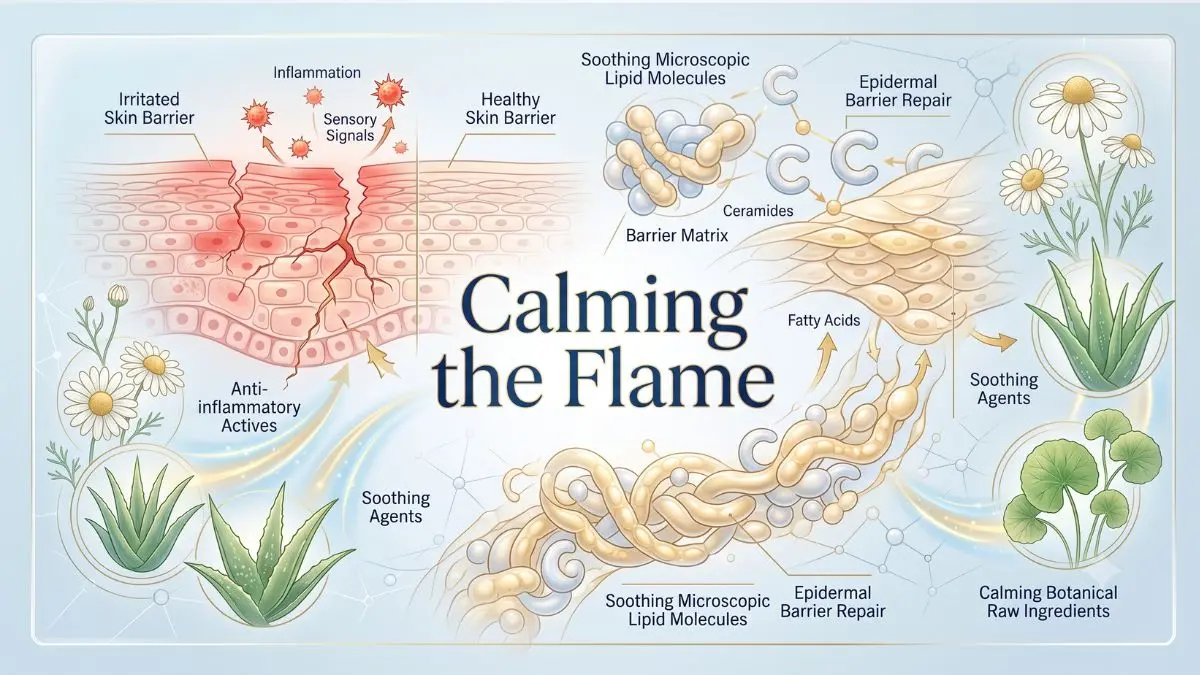
Seborrhea is not simply "dry skin" or "excessively oily skin." Rather, it is a pathological combination of two distinct factors: elevated sebum production and the overgrowth of a microscopic yeast called Malassezia, which naturally resides on our skin. When the protective epidermal barrier is weakened—whether by stress, climate changes, or harsh cleansers that strip the skin's natural pH—the Malassezia yeast penetrates into the deeper layers of the stratum corneum.
Once inside, it breaks down the triglycerides in our sebum into highly irritating free fatty acids, triggering a vicious cycle:
Chronic Irritation: The immune system responds with localized inflammation, manifesting as intense redness and scaling.
Disrupted Cell Turnover: In an attempt to shed the "invader," the skin dramatically accelerates its cell renewal cycle, leading to the characteristic flaking associated with seborrhea.
Barrier Collapse: The skin loses its ability to retain moisture, leading to severe dehydration and leaving it increasingly sensitive and vulnerable to environmental triggers.
The Trap of Topical Steroids and Harsh Drying Agents
The immediate reaction for many is to reach for hydrocortisone (steroid) creams or aggressive drying agents. While steroids provide rapid relief by temporarily suppressing the inflammatory response, prolonged use leads to a severe clinical rebound: thinning of the skin layers, irreversible capillary damage, and a far more aggressive flare-up once the treatment is stopped.
Conversely, attempting to "dry out" the oiliness with alcohol-based toners or harsh surfactants achieves the exact opposite result. The skin, sensing an extreme threat of dehydration, overcompensates by triggering hyper-seborrhea (excessive sebum production), which essentially feeds the Malassezia yeast further.
The Botanical-Molecular Approach: Calming, Balancing, and Rebuilding
To resolve seborrhea, our approach must be restorative rather than combative, utilizing our layering system:
pH Balancing & Anti-Inflammatory Cleansing: Employing a gentle cleanser that removes impurities without stripping the essential lipid barrier, utilizing medicinal plant extracts that soothe irritation and balance the microbiome.
Controlled Yeast Suppression & Cellular Defense: Infusing active botanical antioxidants and targeted molecules to neutralize irritating fatty acids without destroying the skin's beneficial flora.
Lipid Barrier Reconstruction: Locking in hydration with formulas rich in ceramides and pure plant-based fatty acids that mimic the skin's natural lipid structure. This final layer signals to the brain that the skin is secure, effectively shutting down the compensatory overproduction of sebum and redness.