JOURNAL
The Skin Barrier: The Silent Guardian of Your Youth (and How to Repair It When Damaged)
In modern skincare, we are constantly flooded with trends, active acids, and advanced technologies. We try to brighten, renew, firm, and tighten—but often, in our rush for fast results, we forget the single most important element that dictates how our skin looks and feels: the Skin Barrier.
If you have recently experienced persistent extreme dryness, sudden redness, a burning sensation when applying products, or unexpected breakouts, it is highly likely that your skin barrier has been compromised.
In this guide, we will explore exactly how this remarkable mechanism works, why it is essential for maintaining a youthful and healthy appearance, and how to repair it with scientific precision.
What is the Skin Barrier and How Does It Work?
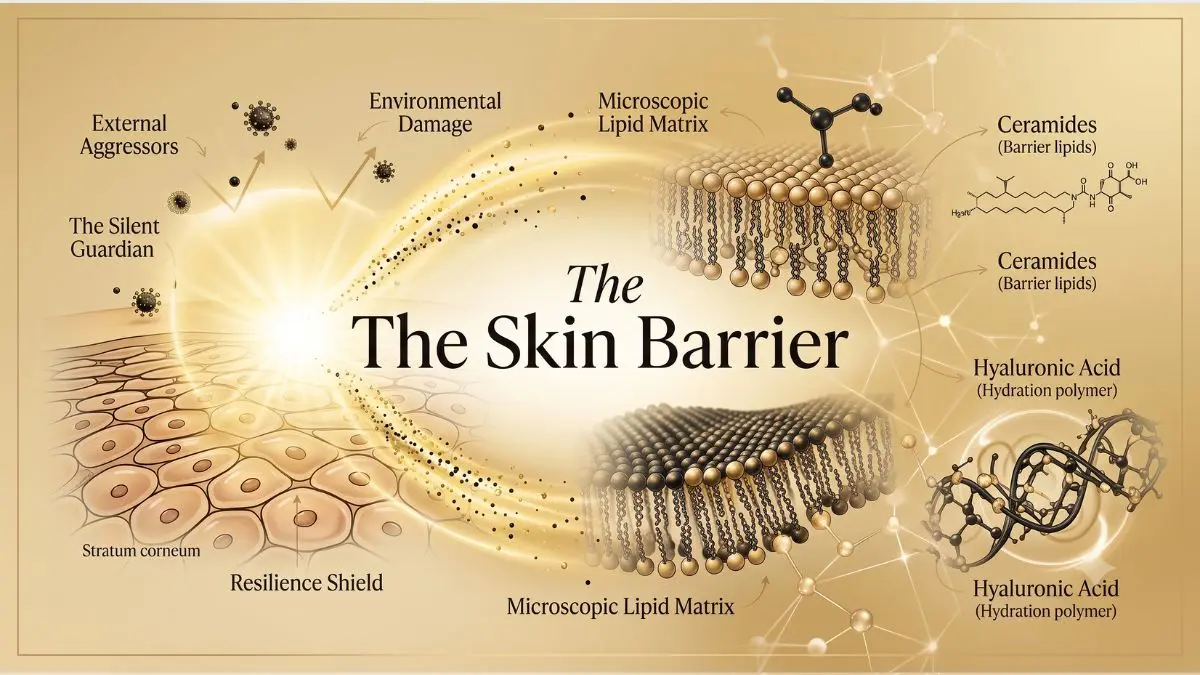
Biologically speaking, the outermost layer of your facial skin is called the Stratum Corneum. The best way to visualize it is as a bricks-and-mortar wall:
The Bricks: Your skin cells (corneocytes).
The Mortar: A rich blend of essential lipids, including ceramides, cholesterol, and fatty acids.
The role of this protective wall is twofold and critical:
Keeping moisture inside: Preventing Trans-Epidermal Water Loss (TEWL). When moisture is locked in, the skin appears plump, vibrant, and deeply hydrated.
Keeping irritants out: Blocking pollution, bacteria, allergens, and environmental toxins that can trigger accelerated inflammation and premature cellular aging.
The Signs: How Do You Know If Your Skin Barrier Is Damaged?
When the "mortar" between the cells erodes, the wall becomes permeable. Moisture escapes, and irritants penetrate. Your skin will immediately signal this through several distinct symptoms:
Hypersensitivity: Products that used to complement your skin suddenly begin to tingle or burn.
Dryness and flaking: The skin feels tight, dehydrated, and lacks elasticity, even after applying a rich moisturizer.
Redness and inflammation: The appearance of diffuse redness, itching, or symptoms resembling seborrheic dermatitis and eczema.
Sudden breakouts: With the barrier compromised, bacteria penetrate much more easily, leading to deep, inflammatory blemishes.
The Causes: What Damages the Skin's Natural Shield?
In most cases, a damaged skin barrier is the result of a combination of environmental factors and incorrect skincare habits:
Overuse of acids and retinol: An aggressively combined regimen of chemical peels and active acids without adequate protection and restoration.
Harsh cleansing: Using stripping cleansers that wash away the skin's natural and necessary lipids.
Weather changes and stress: Dry air, cold climates, and even psychological stress (which spikes cortisol levels) directly impair the skin's innate ability to regenerate.
The Restoration Protocol: How to Scientifically Repair Your Skin Barrier
Repairing the skin barrier requires pausing, listening to your skin, and shifting to a focused regimen aimed at one thing: nourishment, soothing, and rebuilding.
Gentle and Balancing Cleansing It is time to say goodbye to drying soaps or aggressive scrubs. Use a gentle cleanser that does not disrupt the skin's natural pH, leaving it soft and comfortable from the very first rinse.
Restoring Water and Energy to the Cells Damaged skin needs deep hydration that binds to it immediately. Utilizing advanced serums that combine hyaluronic acid of various molecular weights with energetic and botanical ingredients allows moisture to penetrate deep layers, encouraging cells to repair themselves. [Link your relevant serum here, e.g., Gold Serum or Hyaluronic Serum] - Combining a concentrated serum rich in nutrients will give the skin the vital boost and protection it needs right now.
Sealing and Deep Nourishment (Rebuilding the "Mortar") To prevent moisture from evaporating, you must lock it in with a cream rich in bio-technological ingredients, peptides, and potent antioxidants. Your night cream or recovery cream should act as a smart protective shield, mimicking the skin's natural lipid layer and allowing it to recover overnight. [Link your moisturizing/recovery cream here] - Choosing LAOR Care's nourishing and repairing cream will provide the skin with the precise building blocks needed to reconstruct the epidermal wall.
Patience Pays Off
The process of repairing the skin barrier typically takes anywhere from two to four weeks (depending on the severity of the damage and your natural cellular turnover rate). During this time, it is highly recommended to reduce the use of aggressive active products and focus solely on your balancing, numbered ritual.
When your skin barrier is healthy and strong, you will notice the difference immediately: your skin will glow, its texture will become smooth and even, and complaints of dryness or sensitivity will be a thing of the past. Listen to your skin—it knows exactly what it needs.